
By Stephanie Chong | 24 October 2026 | 7 min read
Key Takeaways
In This Article
An e-voucher is a digital voucher, usually a unique code or QR code sent by SMS, email or app, that a customer exchanges for a discount, a fixed cash value or a specific item. For a business using an e-voucher in Malaysia, the main difference from paper is control: every voucher is issued, validated and redeemed electronically, so you know exactly who used what, where and when.
This guide explains how e-vouchers (also written evouchers) work, where they fit for retailers, F&B outlets, salons and hotels, what to decide before you launch, and the mistakes that make voucher campaigns lose money. If you want to see the product side first, our e-voucher loyalty solution page covers the features.
An e-voucher carries the same promise as a paper voucher, but the value lives in a system rather than on a printed slip. The code itself is only a key; the rules attached to it decide whether it can be redeemed.
That shift matters in three practical ways:
Common formats include fixed-value vouchers (for example an RM50 gift voucher), percentage or amount-off promotions, and item vouchers such as a free drink with a main course.
An e-voucher moves through four stages: set up, issue, redeem and report. Each stage has a clear owner in your business, which is what keeps campaigns tidy.
Redemption speed is the part customers notice. If staff must phone head office or search a spreadsheet, queues build and goodwill disappears, so test the redemption flow at a real counter before launch.
Malaysian merchants mainly use e-vouchers for gifting, promotions, staff rewards and loyalty. The right format depends on whether you want new revenue, repeat visits or a more motivated team.
Fixed-value gift vouchers suit festive periods such as Hari Raya, Chinese New Year, Deepavali and Christmas, when customers look for easy presents. Digital delivery means a buyer can send a voucher to a relative in another state within minutes.
Single-use discount codes let you run a targeted offer, for example a weekday lunch promotion for one outlet, without discounting every transaction.
Companies issue vouchers as staff incentives or client appreciation gifts. Custom denominations make it simple to match budgets for different grades or occasions.
Sending a voucher after a customer’s third visit, or to customers who have not returned in 90 days, turns a generic loyalty idea into a measurable action.
Moving from paper to digital mostly reduces leakage and admin. The table below compares the two on the points merchants raise most often.
| Area | Paper voucher | E-voucher |
|---|---|---|
| Fraud and copying | Relies on staff spotting fakes | Code validated by the system at redemption |
| Changing a campaign | Reprint and redistribute | Update rules centrally |
| Delivery | Printed, posted or handed over | SMS, email or app in minutes |
| Redemption records | Collected slips, counted by hand | Logged automatically per outlet |
| Campaign insight | Estimated after the event | Issuance and redemption visible in real time |
Paper still has a place for some audiences, but once you run campaigns across several outlets, manual tracking becomes the most expensive part of the exercise.
Decide the goal, the rules and the reporting before you issue a single code. Most voucher problems come from rules that were never written down.
Brief your counter staff with a one-page guide covering how to redeem, what to do if a code fails and who to contact. A confident cashier protects the customer experience far more than any campaign design.
Pick three or four measures before launch and review them weekly while the campaign runs:
A campaign with a modest redemption rate but a strong uplift in bill size can be more profitable than one where every voucher is used on the cheapest item.
The costly mistakes are vague terms, no expiry, and no link between voucher data and sales data. Each one is easy to avoid at the planning stage.
Linking voucher redemptions with your terminal and sales records closes that last gap. Our data analytics and reconciliation service matches sales and settlements automatically, which makes campaign results easier to trust.
PM Advisors offers an e-voucher loyalty solution in partnership with Coup Marketing Asia Pacific. It covers issuance with custom denominations, fast redemption at the point of sale, flexible campaign rules for single or multiple redemptions, and real-time tracking of issuance and redemption.
Because we also supply smart POS terminals, we can look at how vouchers, card and e-wallet payments fit together at your counter rather than treating them as separate projects. If you are planning your first e-voucher campaign in Malaysia or replacing paper vouchers, tell us about your business and we will recommend a setup that suits your outlets.
An e-voucher is a digital voucher, usually a unique code or QR code, that a customer redeems for a discount, a fixed cash value or a specific item. The code is checked against a system at the point of sale, so it can only be used according to the rules the merchant set, such as validity dates and redemption limits.
Yes, in everyday use e-voucher and evoucher mean the same thing. A digital gift card is one type of e-voucher with a stored value. Other types include percentage discounts, amount-off promotions and item vouchers, all issued and redeemed electronically rather than on paper.
It depends on the campaign rules you set. A single-use voucher becomes invalid after one redemption, while a multiple-redemption voucher can be used several times until its balance or redemption limit is reached. Decide this before issuing so that staff and customers know what to expect.
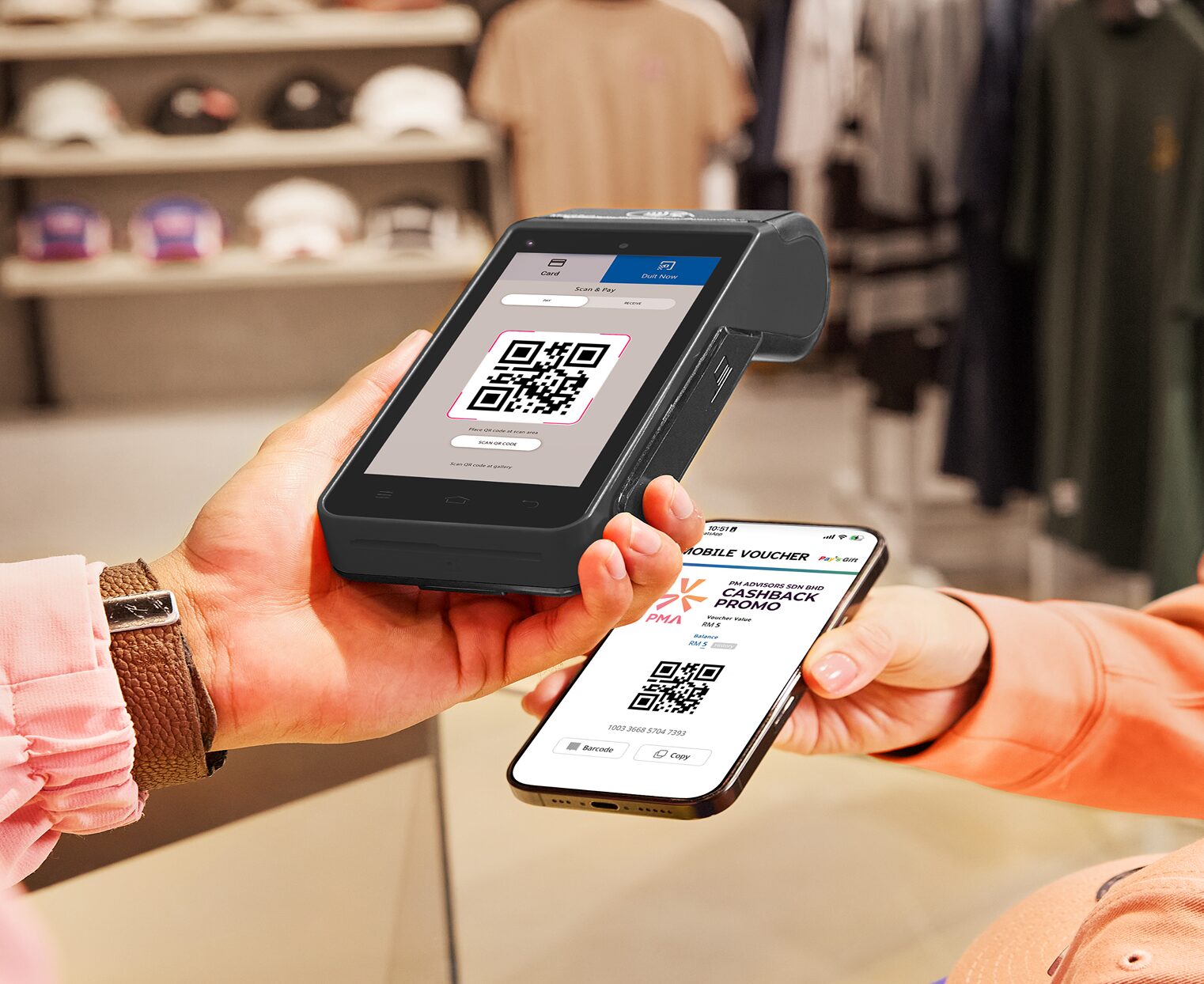
The customer shows the code or QR code on their phone, and the cashier enters or scans it at the point of sale. The system confirms that the voucher is valid and unused, then applies the value to the bill. The redemption is recorded immediately for reporting.
Businesses with repeat customers or seasonal gifting demand benefit most, such as F&B outlets, retailers, beauty salons, hotels and service providers. Companies that reward staff or clients also use them. The common thread is a need to issue value quickly and track how it is used.
About the author: Stephanie Chong
Stephanie Chong writes for PM Advisors on payments, merchant operations and cashless commerce in Malaysia. Her guides turn payment topics such as POS terminals, online payment gateways, e-vouchers and reconciliation into practical steps that business owners can act on.